The retro edit
Is retro gaming worth it? Original hardware or an emulation console
If the question is whether classic games are still worth playing, the answer is yes, and the fact that people are still buying them decades later settles it. The more useful question is how to play them. There are two routes: tracking down original consoles and cartridges, or buying a modern console built to run the classics. We sell the second kind, so take this with that in mind, but both routes have real strengths.
The case for original hardware
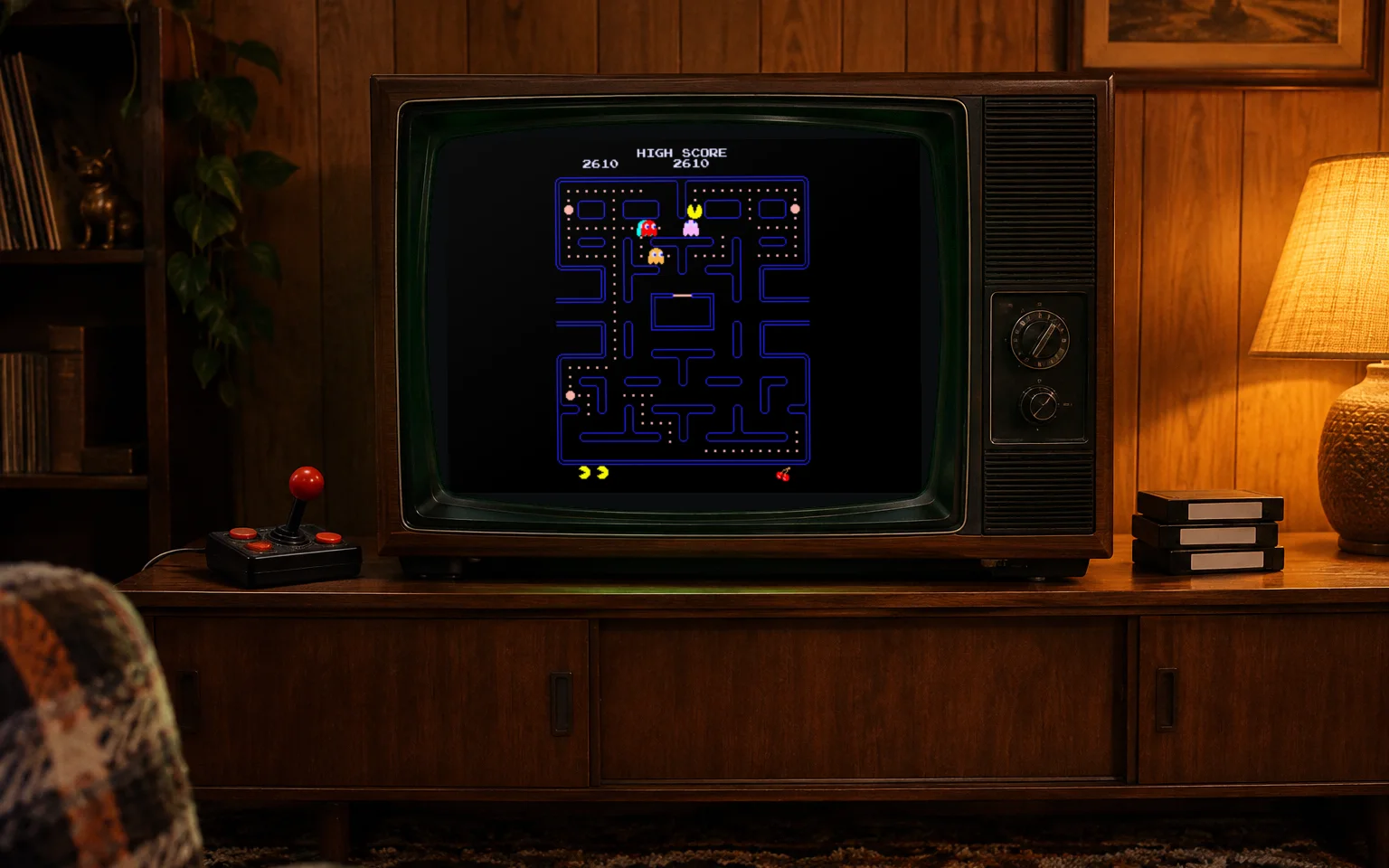
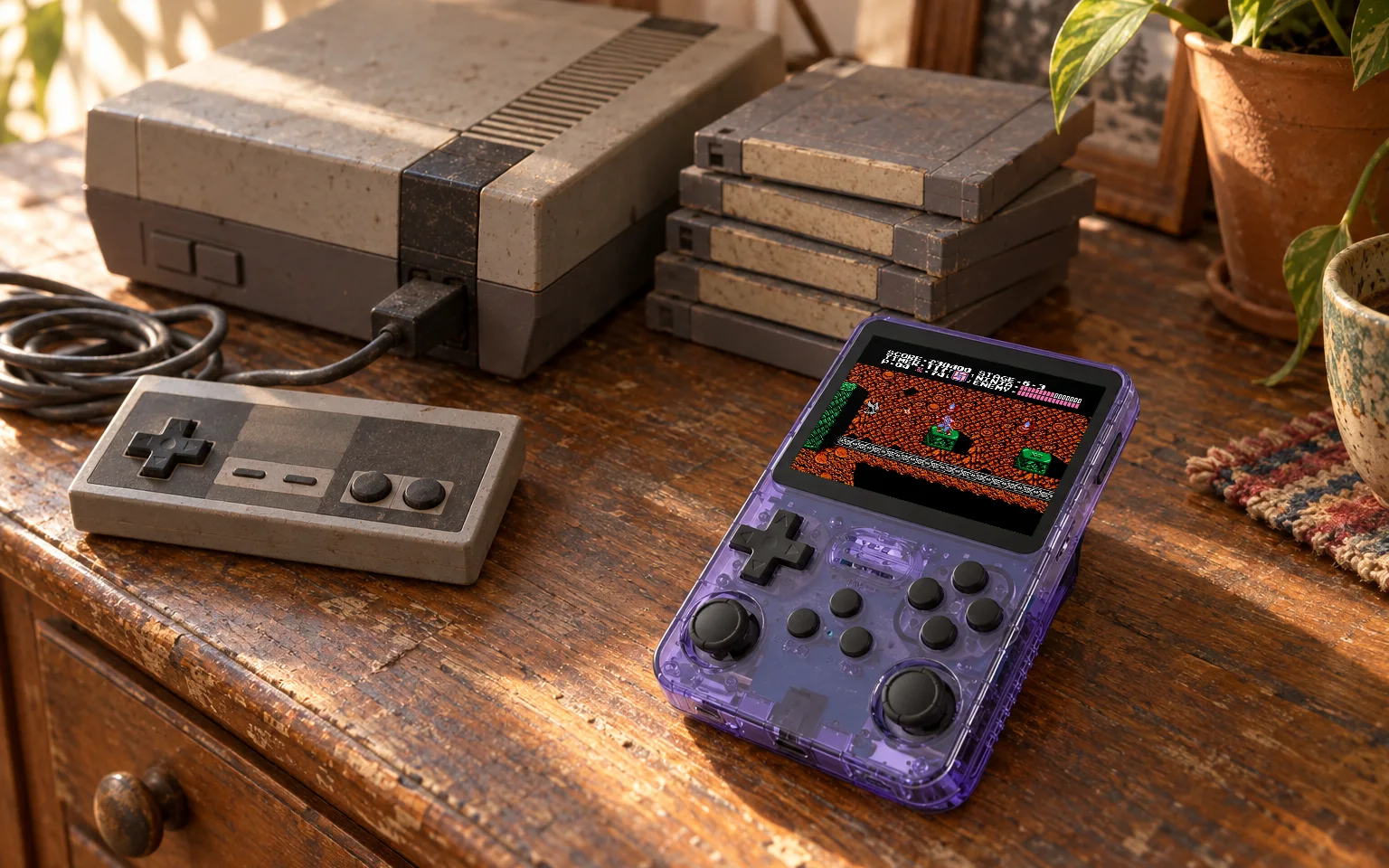
Nothing else feels exactly like the real thing. The weight of the controller, the click of a cartridge going in, the sound of a disc drive spinning up. For collectors, the boxes, manuals and shelves of cartridges are part of the pleasure, and a collection is something you can hold.
Original hardware is also accurate by definition. Every game plays exactly as it did, with no question about whether an emulator handles it correctly.
The costs of original hardware
Price
Classic consoles and games have become collectors' items. Prices for popular titles have climbed for years, and a complete library for even one system can cost far more than people expect.
Modern TVs
Older consoles output analogue signals made for tube televisions. Plugged into a modern flat TV, many look soft and blurry, and some TVs no longer accept the connection at all. Getting a good picture usually means adapters or an upscaler, which adds cost and cables.
Age
Hardware that is thirty or forty years old wears out. Many cartridges kept saves on a small internal battery, and those batteries are now dying, taking the saves with them. Disc drives wear, capacitors fail and controllers lose their grip.
Space
Each system needs its own console, controllers, power supply and cables. Three or four systems take over a shelf and a power strip.
The case for an emulation console
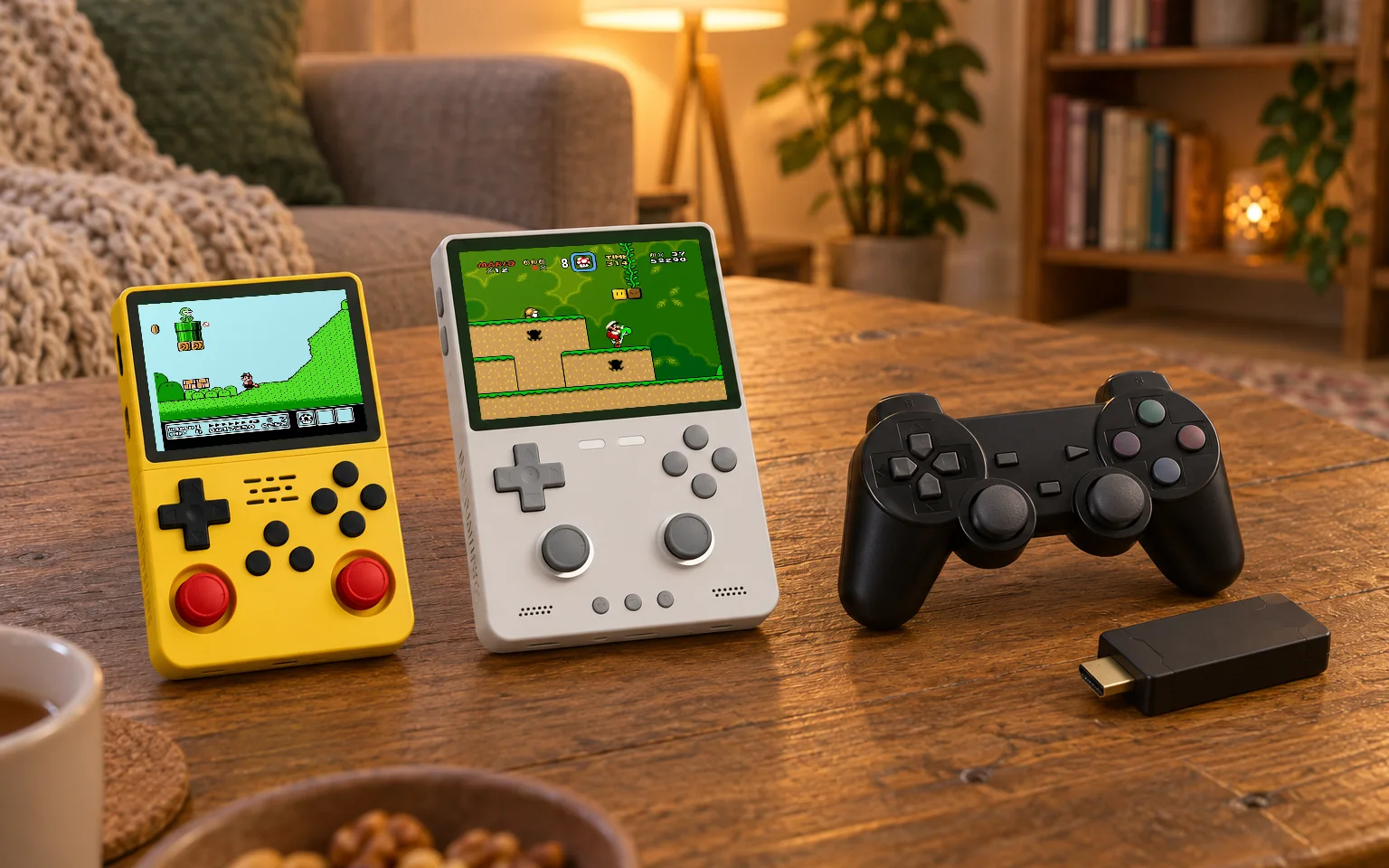
One device plays many systems. Our TV consoles connect over HDMI and fill a modern TV cleanly, and our handhelds carry their own screen. Games live on a memory card or built-in storage, so there is no hunting for cartridges.
You also get conveniences the originals never had. You can save partway through a game, even an arcade game. Most of our handhelds fit in a pocket, and the consoles cost less than a single sought-after original game often does.
The costs of an emulation console
It is honest to name them. Emulation is very good for arcade, 8-bit and 16-bit games, and very good for PS1 on the right hardware. Accuracy varies more as you move toward the late nineties, and some games in some systems still run imperfectly. Menus and memory cards take a little learning, and a console that holds a whole library does not have the same charm as a shelf you built one cartridge at a time.
So which is worth it?
If you want to collect, go for original hardware, and enjoy the hunt. If you want to play, and especially if you want to play across many systems, on a modern TV or on the move, an emulation console is the practical choice and a far smaller outlay.
Plenty of people do both: a few treasured originals on the shelf, and a handheld in the bag for everything else. If you want to try the second route, our guide to choosing a retro console walks through all nine we sell, and what counts as retro gaming explains which eras each one covers.