The retro edit
Easter eggs in retro games, and how to find them
Long before online guides, the only way to learn a game's secrets was from a friend, a magazine or hours of trying things that should not work. Classic games are full of them: hidden rooms, cheat codes, secret characters and glitches so famous they became legends. Here is where the tradition started, and how to go hunting yourself.

The room with a name in it
In 1980, Atari did not credit the programmers who made its games. Warren Robinett, who created Adventure for the Atari 2600, hid his name in a secret room that could only be reached by finding an almost invisible single-pixel object and carrying it to the right place. When players found it, Atari decided to leave it in, and the idea of a hidden surprise inside a game got its name: an Easter egg.
A code that outlived its game
Up, up, down, down, left, right, left, right, B, A. Kazuhisa Hashimoto added the sequence in 1986, while porting the arcade game Gradius to the Famicom, because he found the game too hard to test without extra power. It was never removed. Konami reused it in later games, most famously Contra, where it gave players thirty lives, and it became the best-known cheat code in gaming.
Secrets nobody put there
Some of the most famous secrets were never planned. In Super Mario Bros., a precise move through a wall in world 1-2 leads to a pipe into the Minus World, an endless water level that was simply a mistake in how the game read its data. In the first Pokémon games, a sequence of actions summoned MissingNo., a scrambled creature that existed only because of a bug.
Players traded these discoveries in playgrounds long before anyone could explain them, which only made them more exciting.
Rumours that were not true
For every real secret there were ten invented ones. The most famous began with a victory quote in Street Fighter II that a translation rendered as a mention of Sheng Long. A magazine ran an April Fools' story in 1992 explaining how to fight him, and players spent years trying. He was never in the game.
How to hunt for secrets today
Save first
Save before you try anything strange. The worst part of hunting for secrets in the eighties was losing an hour of progress to one bad idea. The consoles we sell let you save partway through a game, so an experiment costs nothing.
Try the title screen
Many games accepted button sequences on the title screen or at the start of a level, usually for a level select, a sound test or extra lives. Sonic the Hedgehog, for one, hid a level select behind a sequence of directions entered at the title screen.
Walk into walls
Designers hid rooms behind walls that looked solid, at the very edges of levels and in places the camera did not show. Jump where there is no reason to jump, and walk off the edge of the screen.
Wait
Some games react if you do nothing. Leave the controller alone on a title screen or mid-level, and occasionally a character gets bored, a demo plays or something unexpected happens.
Look at the credits and menus
Hidden messages from developers often sat in credits, sound test menus and the text of options screens, written in the hope that someone curious would find them one day.
A good console for the hunt
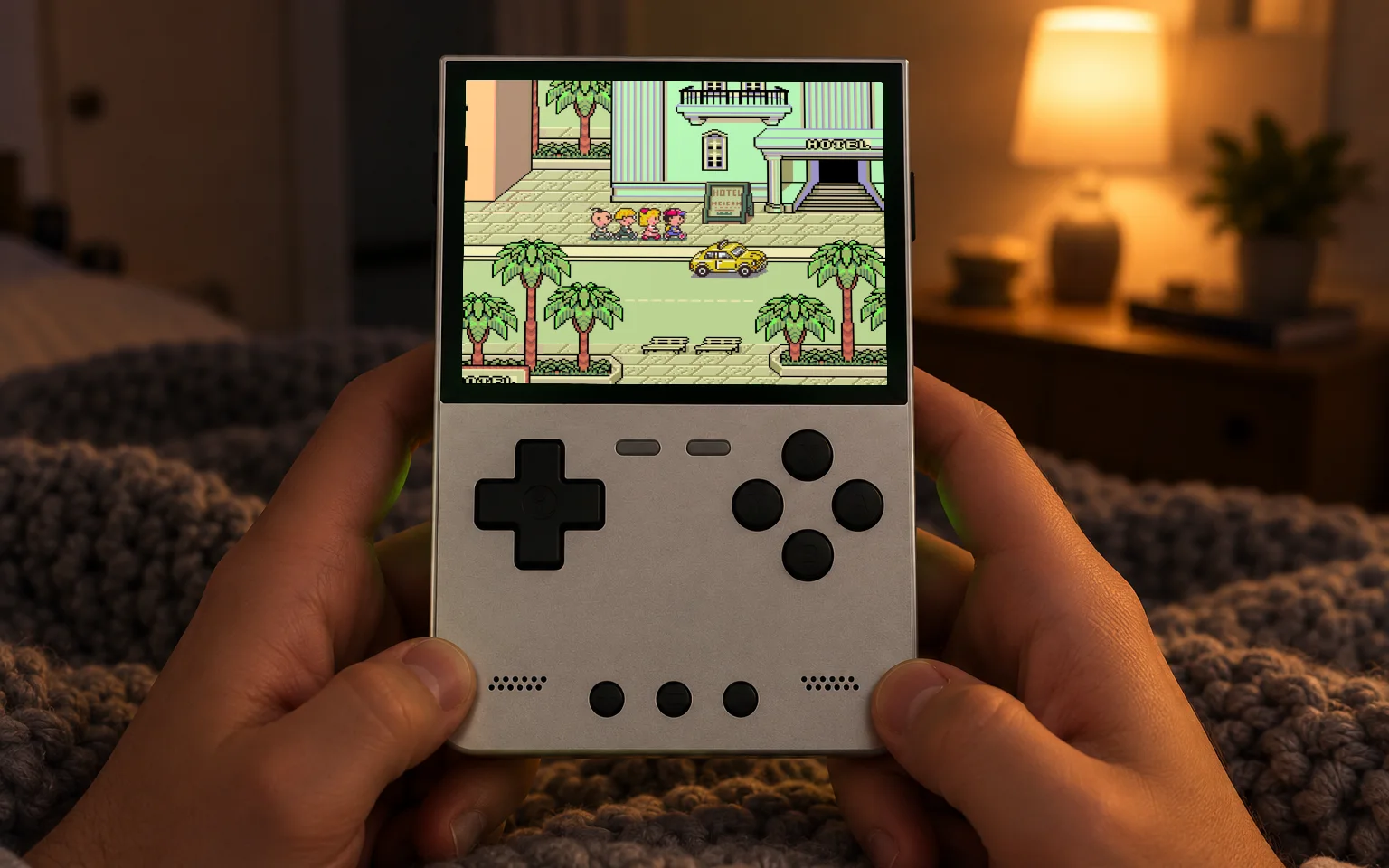
Secrets live mostly in 2D games from the 8-bit and 16-bit years, and those play well on every console we sell. For hunting in your hands, the Trimui Brick gives you a crisp screen that shows every pixel. On the TV, the Game Stick Lite 4K covers the era, and a second controller means someone can take notes. Our guide to the best console for each kind of game has more.