The retro edit
What counts as retro gaming?
There is no official definition of retro gaming, and people will argue about the edges of it forever. But there is a working rule of thumb most players share, and a clear set of eras almost everyone agrees on. Here they are, along with how far back and forward our consoles reach.
The rule of thumb
A game or console is generally called retro when it is at least twenty years old, or two hardware generations behind whatever is current. By that measure, the line keeps moving. Games from the early 2000s, which felt modern to many of us not long ago, now qualify.
The word also describes a style. Plenty of new games are made with pixel art, chiptune music and old-fashioned difficulty on purpose. They are retro in spirit even when they were released last year.
The eras, from the beginning
Arcades and the first home consoles, late 1970s to early 1980s
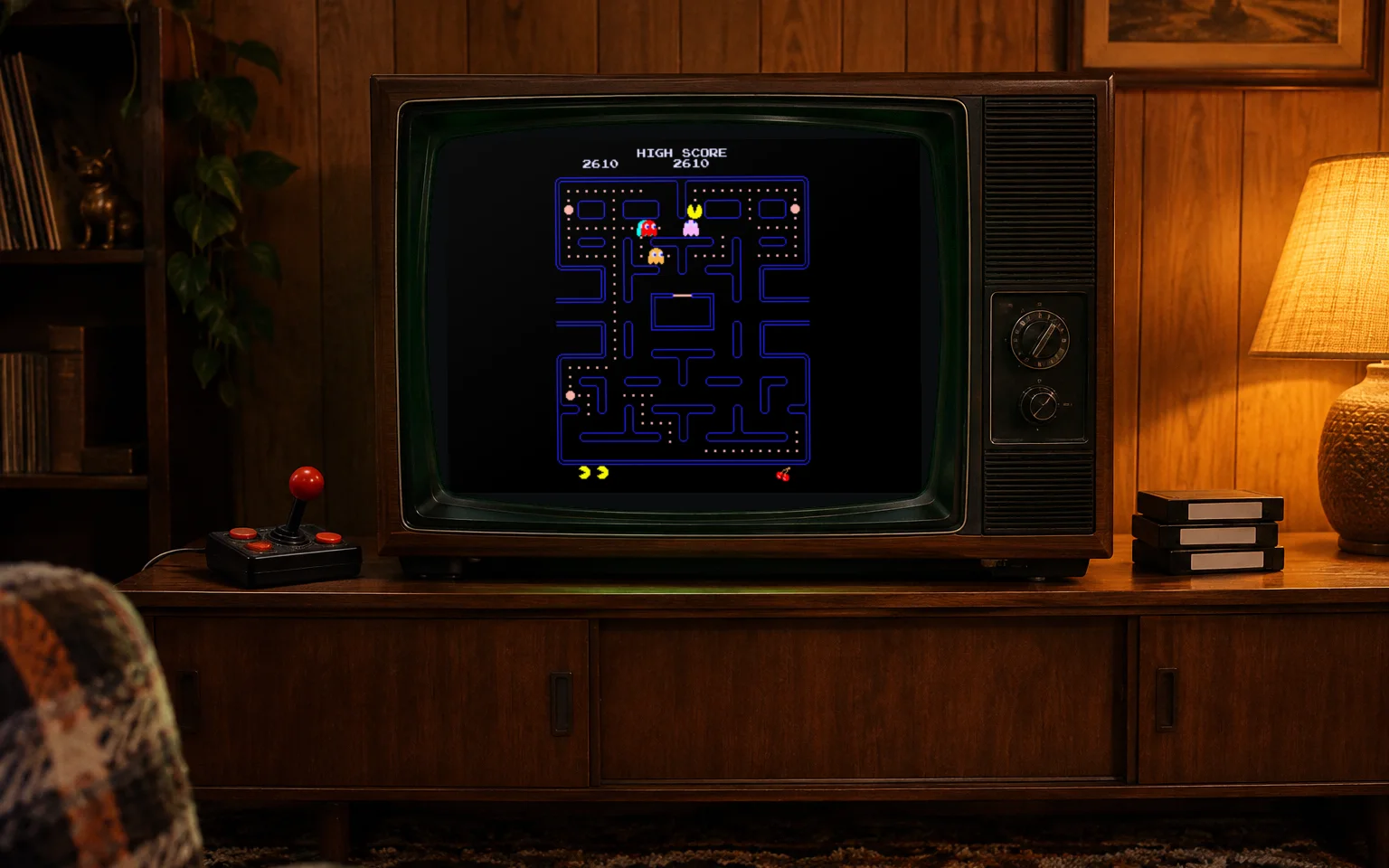
Coin-operated cabinets in bars and arcades, and the first cartridge consoles at home, the Atari 2600 among them, launched in 1977. Simple shapes, a handful of colours and scores meant to be beaten.
8-bit, mid 1980s
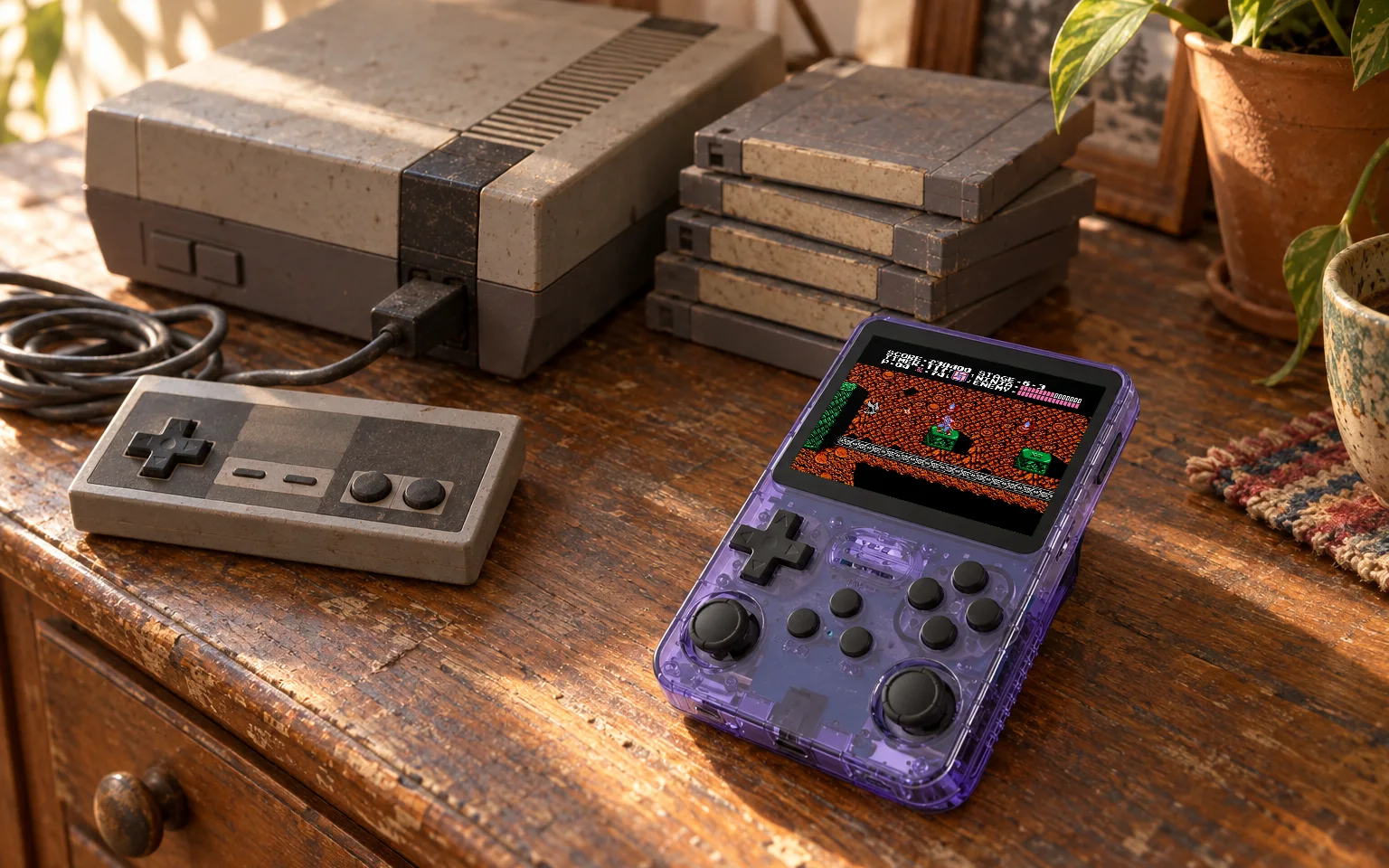
The Famicom launched in Japan in 1983 and arrived in North America as the NES in 1985, with the Sega Master System following. This is the era of the side-scrolling platformer and the first long adventures you could not finish in one sitting.
16-bit, late 1980s to mid 1990s
The Mega Drive, known as the Genesis in North America, and the Super Nintendo brought richer colour, better sound and bigger sprites. Many people think of this as the golden age of 2D games, and it is the heart of most retro collections.
32-bit and 64-bit, mid to late 1990s
The PlayStation and Sega Saturn arrived in 1994, and the Nintendo 64 in 1996. Games moved into 3D, analogue sticks appeared, and CDs made room for music and voice acting.
Handhelds
Handheld consoles have their own timeline. The Game Boy arrived in 1989, the Game Boy Advance in 2001 and the PSP in 2004. Each has a library of classics made for small screens and short sessions.
The early 2000s
The PlayStation 2, GameCube and original Xbox are now more than twenty years old, and by the rule of thumb they count. For many collectors they are the newest generation that feels retro.
What makes a game feel retro
Age is only part of it. Retro games tend to share a few things: a game that shipped finished on a cartridge or disc, with no patches later. Controls you learn in a minute and master over months. Difficulty that assumed you would play the same level many times. And music written for sound chips with a handful of channels, which is why so much of it is still stuck in people's heads.
Which eras our consoles cover
Every console we sell plays the arcade, 8-bit and 16-bit eras. That is where the Game Stick Lite 4K focuses, and it is where the Trimui Brick and Brick Hammer shine in your hands.
For the 32-bit years, the X8 TV Game Stick, the R36S, the R36MAX2 and the Trimui handhelds all play PS1 games. For N64 and PSP, the G99 on the TV and the Smart Pro S in your hands have the most headroom.
The early 2000s generation is beyond what these consoles are built for, and we would rather say so than let you find out after buying. For the eras they do cover, our guide to choosing a retro console will help you pick.